“Earthquake Resistant Bracing System(ERBS) for Manufactured Homes”
“XI2, Tie Down engineering, Oliver Technologies along with Central Piers seismic bracing systems installed to HUD standards"
Earthquake Fire Risk
The biggest danger in an earthquake isn’t your home collapsing — it’s fire. When a manufactured home shifts even a few inches, gas lines can tear and electrical wires can spark. That combination can ignite fast, and manufactured homes burn quicker than site‑built houses.
An Earthquake Bracing System helps keep the home from sliding, which protects the gas and electrical lines underneath. Less movement means a much lower chance of fire.
What is an ERBS System?
Did you know that many State Approved Engineered Permanent Foundation Systems also provide earthquake-resistant bracing?
In many cases, a properly installed engineered permanent foundation can help stabilize a manufactured home during seismic activity.
Many systems by Oliver Technologies and Central Piers provide both permanent foundation support and earthquake-resistant bracing capabilities.
This means a single engineered system may help satisfy multiple engineer, lender, and foundation requirements.
Many homeowners first learn about earthquake bracing after receiving a non-compliance letter or engineer's report.
Many people are surprised to learn that one engineered system can often address both foundation and seismic stability needs.
Contact R Root Manufactured Home Solutions to learn more about engineered permanent foundation systems and earthquake-resistant bracing options.

Why ERBS is required
-
Prevents frame movement
-
Protects utilities
-
Stabilizes piers
-
Required for safety
-
What may be under the home, and what each part does
Supports and bracing under a California manufactured home
What you may find, what it is for, and what it does in an earthquake. Piers / Stands under the frame that carry the home’s weight hold the home up, not in place. On installations since September 1994, piers must be mechanically connected to the home and the footing. Tie-downs Straps or anchors from the frame to the ground required on installations since September 1994, and designed for wind forces rather than earthquakes. Earthquake-resistant bracing systems, a system certified by HCD and installed under the home are designed to resist earthquake forces and to limit how far the home can drop. Permanent Foundation System means the home is attached to an engineered foundation system and the home is anchored to the foundation rather than resting on piers alone.Key Takeaway
- A certified bracing system is meant to reduce damage and protect the people inside. It does not make the home earthquake- proof and no installation does.
What we install
-
XI2 systems
-
Tie Down Engineering systems
-
Oliver Technologies systems
- Central Pier systems
-
Pier stabilization
-
Frame anchoring
-
Seismic bracing upgrades
What problems ERBS solves
-
Home shaking
-
Pier movement
-
Frame shifting
-
Loose supports
-
Seismic instability
Why Choose Us
40+ Years Manufactured Home Expertise We’ve worked exclusively in the manufactured home industry since 1980 — from Florida to California — giving you unmatched knowledge of seismic bracing requirements, and HUD compliance.
Licensed California Contractor (C‑47) Your ERBS installation is performed under a licensed contractor specializing in manufactured home foundations, anchoring, and stabilization systems.
HUD, FHA & VA Compliant Systems We install XI2, Tie Down Engineering, and Oliver Technologies systems, along with Central Piers systems
Engineer‑Ready Installations Every installation is performed to the specifications required for engineer certification, ensuring your home is safe, stable.
Clear Pricing — No Hidden Fees Straightforward pricing, no surprises, and no upselling. You get exactly what your home needs to meet seismic and safety requirements.
Earthquake Vulnerability in Manufactured Homes
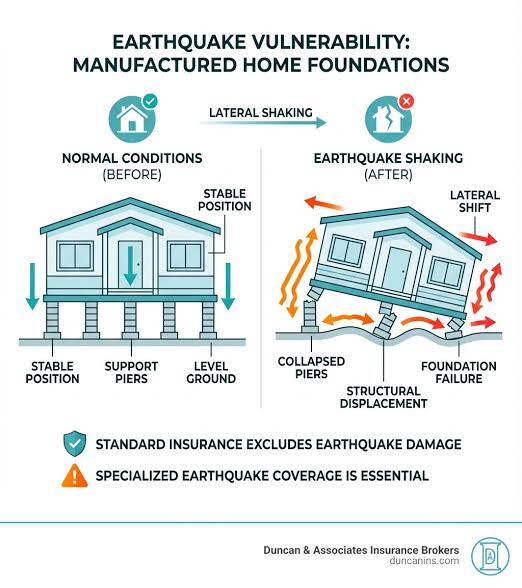
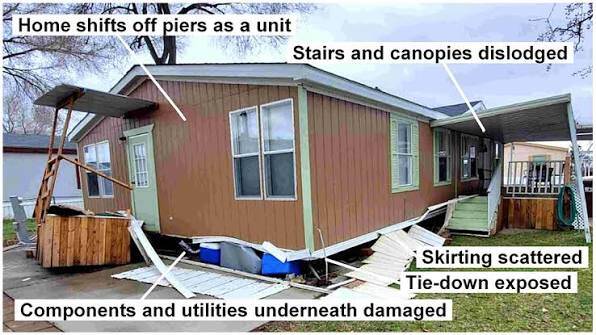
Manufactured homes are especially vulnerable during earthquakes because their support systems rely on piers, blocks, and lightweight anchoring. When seismic shaking occurs, the entire home can shift as a unit — causing structural displacement, pier collapse, and damage to utilities underneath.
Even a moderate earthquake can lead to:
-
Home shifting off piers
-
Damaged stairs and canopies
-
Scattered skirting
-
Exposed tie‑downs
-
Broken plumbing and electrical lines
-
Park violations and red‑tag conditions
Standard insurance does not cover earthquake damage. Proper seismic bracing dramatically reduces the risk of structural failure.
Cost Comparison: ERBS vs. Earthquake Damage
An ERBS system usually costs between $3,000 and $6,000 ( Typical Doublewide) That’s the price to upgrade the strapping, anchored tie‑downs, and bracing under your home so it stays stable during shaking.
A home that falls or shifts in an earthquake can cost $20,000–$50,000+ in damage. That includes broken piers, torn plumbing and electrical lines, cracked walls, doors and windows out of square, destroyed skirting, damaged stairs and canopies, and the risk of the home being red‑tagged and unlivable.
ERBS is a few thousand dollars now to avoid a catastrophic bill later — and to keep your home safe enough to stay in after the shaking stops.
A certified bracing system is meant to reduce damage and protect the people inside. It does not make the home earthquake- proof and no installation does
Who needs ERBS? Any manufactured home in an earthquake zone — especially in California. ERBS is simply the upgraded strapping and anchored tie‑down system that keeps the home stable during shaking, no matter how old or new the home is.
Beyond the ordinary
This is where our journey begins. Get to know our business and what we do, and how we're committed to quality and great service. Join us as we grow and succeed together. We're glad you're here to be a part of our story.